A Literary Giant Goes Sci-Fi
on reading Ian McEwan's What We Can Know

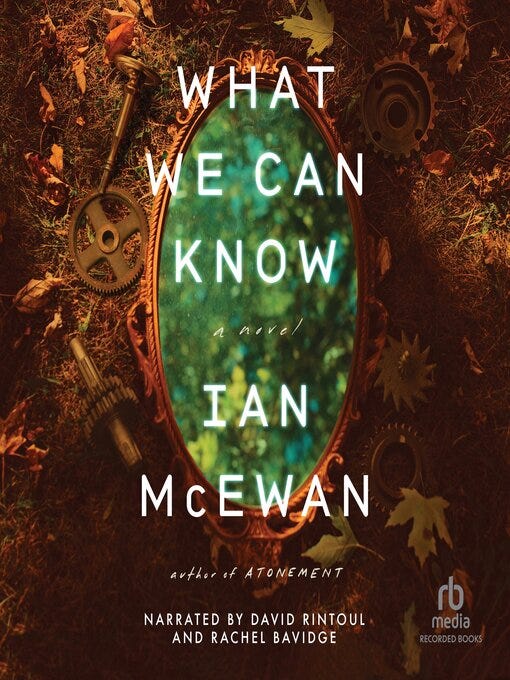
Ian McEwan’s latest What We Can Know, like his masterpiece Atonement, deals with the intersection of the personal and the literary. Here, though, he begins with a mystery of literary scholarship and delves deep into the secrets of a renowned literary figure and his seemingly devoted wife and partner.
The novel conceit that marks What We Can Know as a hybrid of literary fiction and science fiction is that it is set in the twenty-second century. The protagonist--at least, the initial protagonist--is a scholar of literature who has focused his career on the fictional poet Francis Blundy and specifically on the fate of a legendary lost poem delivered once at a dinner party and never seen again.
This science fiction conceit really doesn’t serve a central role in the story. The historical sleuthing into Blundy’s life involves digital artifacts and the couple in question seem decidedly contemporary, but otherwise the bones of this story could have revolved around a 21st century scholar investigating some figure from the late 19th.
Notably, though, McEwan’s prognostication for our immediate future is bleak--part of a growing literary consensus that we are rightly doomed--forecasting a global population a century hence just north of four billion. Because of climate change, Britain is left a somewhat disconnected archipelago and one wonders just how many institutions of higher learning would have surviving literature programs given such a decimation.
But he brings his typical verve for rich interiority to his narrators, along with their typical intellectual capacity for self-knowledge and, with it, self-beguiling rationalization, making it as engrossing as all his works. But, also typically, there are frustrating lurches to the narrative that smack of overindulgence.
The issue at the heart of the title is a fascinating one that drives the first half of the novel with discipline. The question of what can and cannot be known about past lives through their artifacts and artifice is handled deftly from an academic’s point of view through that opening section, but by the end, McEwan can’t seem to resist untying most of the curtains that veil the answers to the question so that a premise that seems to demand subtlety and ambiguity finds itself mostly defrocked.
Still, like the character of Blundy himself in the world of the novel, there’s no denying McEwan’s genius. His prose is as capable and finely wrought as ever. He’s surely one of our greatest voices in English and he is, at the very least, not content to risk stagnancy, as evidenced by his willingness here to take some wild swings.