Star Trek and Generative AI
Once again, Star Trek predicts the future...but I wish it hadn't.

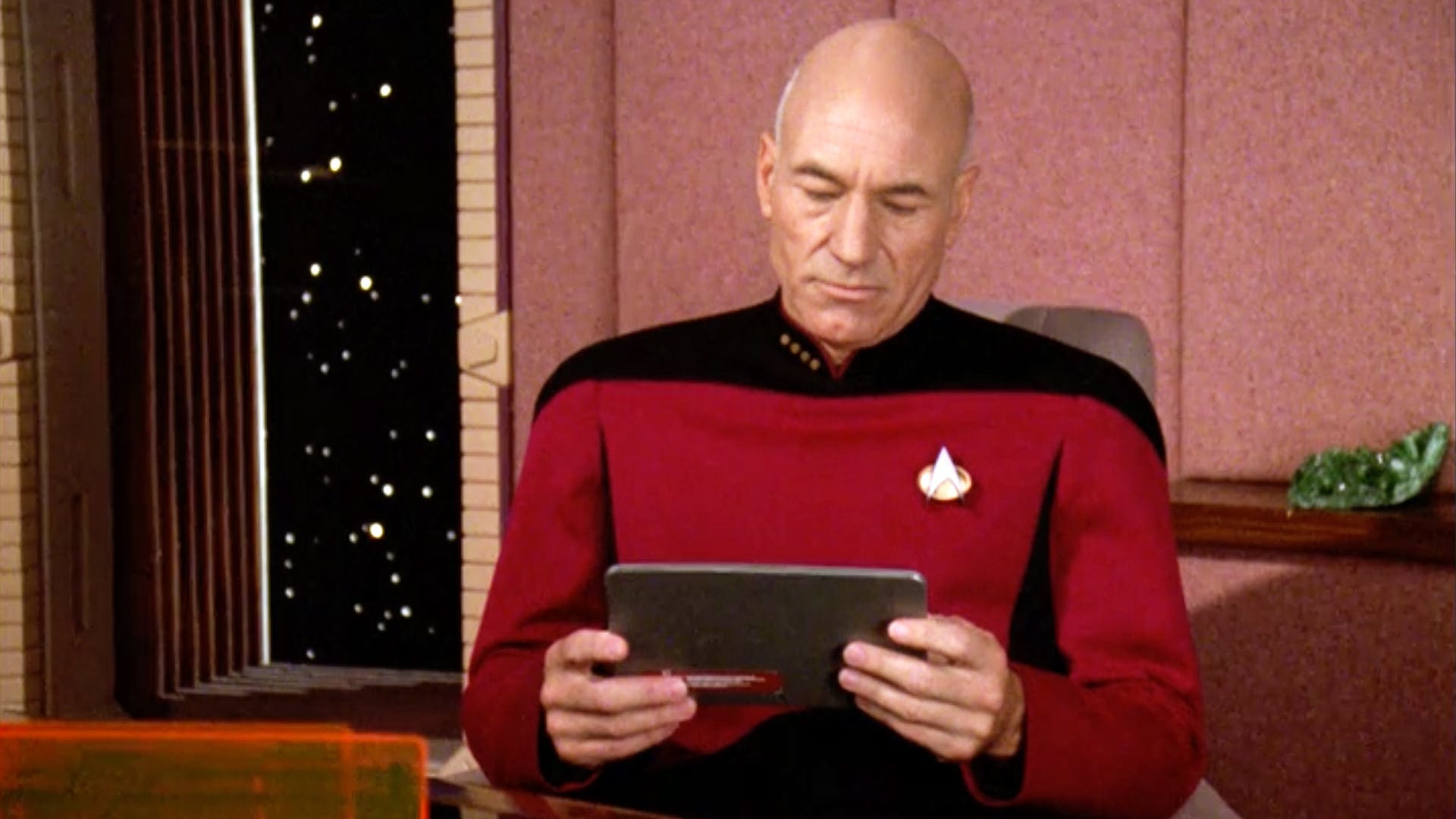
Your phone is a tricorder. The Enterprise D had iPads all over the place. We now have voice-interface computers. You can buy a replicator on Amazon, but it’s called a 3D printer.
Star Trek has a storied history of predicting the future. (Still hoping it was wrong about World War III) And now, I—sadly—think we can add another accurate prediction about technology and its impact on society to the list.
You see, generative AI has been in Trek all along. We just didn’t spot it, or heed the implicit warning.
In the original series episode “Menagerie,” Spock punches in some commands to the computer and falsifies video evidence in a jiffy. How’d he do that so fast?
Or better yet, think about any time we see characters whip up Holodeck programs from a few vocal prompts. How does the computer know what they want, exactly?
It was right there, all along.
And so was the really horrifying message about generative AI.
You ever noticed that our beloved Starfleet officers almost never reference any art—music, movies, TV shows, novels, etc.—from the intervening years between our time and their time? Depending on which franchise, there’s two hundred years of culture that should be much more familiar to them than Berlioz or Shakespeare or Moby Dick. Yet almost exclusively, we hear references to art that predates that period—art we’ve heard of in our time.
Now, the obvious explanation is that the writers didn’t want to make up fictional works of literature or music or film that wouldn’t mean anything to the audience.
But now we see that Star Trek’s predictive power is uncanny, if unwitting.
In the TNG episode “Neutral Zone,” Data tells us that television as a medium didn’t last much beyond the 2040s. Sounds about right. What could possibly so stymie artistic production such that a future utopia would have no art of its own and would be forced to look back only to works from centuries before?
AI slop.
In the Star Trek universe, AI slop killed television; it killed film; it killed music. It killed art. There is no new artistic production in the future of Star Trek, only reductive and recursive exercises. Nothing new is produced because AI has bled all the impetus to master the skills needed to produce new art.
What’s more, we were given explicit warnings to this effect: In the TNG episode “When the Bough Breaks,” we see a society that has become so culturally sterile that it’s become literally sterile. In an effort to sustain their world, these aliens abduct children from the Enterprise to be their next generation (see what I did there?). One of the children is given a device that instantly creates a carving of a dolphin, supposedly realizing the image and intent from his mind. But with no skill. No diligent study of craft. No effort. It just makes it.
And the world that gave itself over to this kind of short cut doomed itself in the process.
But the most salient warning comes from Star Trek Insurrection (proof that even mediocre Star Trek still has glimmers of greatness):
One of the seemingly primitive Baku explains that their culture gave up much of the technological development they had achieved in the past because, “when you create a machine to do the work of a man, you take something away from the man.”